


Step 2: From Zero to a Setlist in weeks
- Jun 9, 2025
- 3 min read
After I finished researching the right songs to play, the next step was actually learning them. Since summer was ending in three weeks and I wanted to visit the hospital once before school started, I had to find a way to maximize the number of songs I could play while still retaining precision.
So I made a goal: 10 songs in 3 weeks.
I know that sounded ridiculous, especially because some of these pieces were definitely not simple. But once I committed to the goal, I knew I had to make it work.
And lo and behold, I was able to make it work. Here's a step-by-step process for how I made my goal come to life.
Step 1: Time Management. Shifting Perspective.
Learning 10 songs is no easy task; heck, learning 10 songs in the span of 3 weeks is even more difficult. To avoid overwhelming myself by trying to condense all 10 songs in a day. I broke the goal down into smaller, realistic chunks that made logical sense in my mind. Instead of thinking, "I need to learn 10 songs," I thought, "I only need to focus on 3 songs per week." And because this was during the summer, I had a lot of free time to dedicate to practicing the piano. This ultimately made the goal seem more achievable, even though the end goal was still the same.
Step 2: Managing daily schedule.
Once I made my goal less overwhelming by splitting it into small weekly chunks, I needed to make sure I was actually showing up every day. Not 5 hours in one day and then 5 minutes the day after, but something consistent. I knew that steady, daily practice would help me retain more and stress less. So I built a simple routine that I could actually stick to, a routine that wasn't too overwhelming and tense, just enough to keep the songs fresh in my mind. So I gave myself a minimum of 30 minutes a day allocated to practicing the piano. Considering I had virtually the whole day free to myself, this was pretty easy to meet. Some days, those 30 minutes turned into an hour without me even realizing it, while other days, I barely made it past the 30-minute mark. But the most important thing was that I showed up, even when I didn't feel like it. And while that consistency, practicing for just half an hour a day, might seem small in the moment, it definitely accumulated, yielding results that I didn't know I could do. But I also realized that consistency wasn't just enough; I also had to make sure that I was using the time wisely. I realized early on that I couldn't just play a run-through of the songs, hoping that I would get better with sheer repetition. Instead, I broke a song down into smaller parts: parts that I'm confident in and parts that needed more work. What I would do is I would focus specifically on the parts that I didn't feel comfortable with. Sometimes, I would only practice 4 or 5 measures for the whole session.
Here is a picture of some of my annotations on specific parts that I needed to work on:

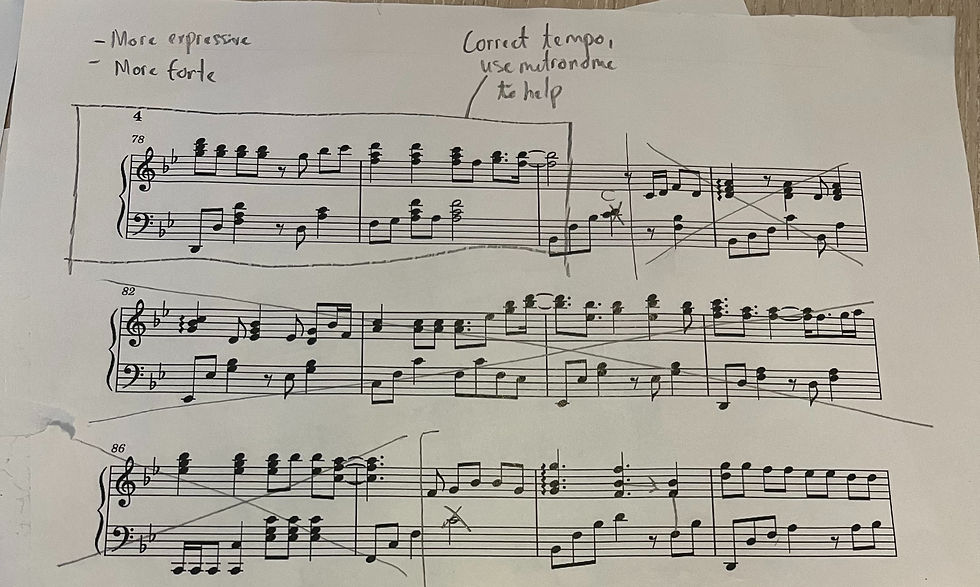
The surprising thing was that once I cleaned up the small, messy sections, the entire song instantly got a massive glow-up in ways that sheer run-through repetition could not give you.
Step 3: Feeling over Perfection
Playing with precision is one thing, but playing with feeling is also another thing. It's easy to get caught up in just hitting the right notes and playing at the right tempo. But what separates good pianists from great ones isn't just about technical accuracy, but it's the emotion that they put into it. It's the ability to transform a musical note on a sheet of paper into something that speaks. For me, that means to listen: not just to the song, but to myself. I often asked myself, "What am I feeling when I play this? What do I want the audience to feel?" As a result, my playing was focused less on getting everything right and more on creating an enjoyable experience for my audience.
Here is a picture of some of my annotations on the tone of the music.

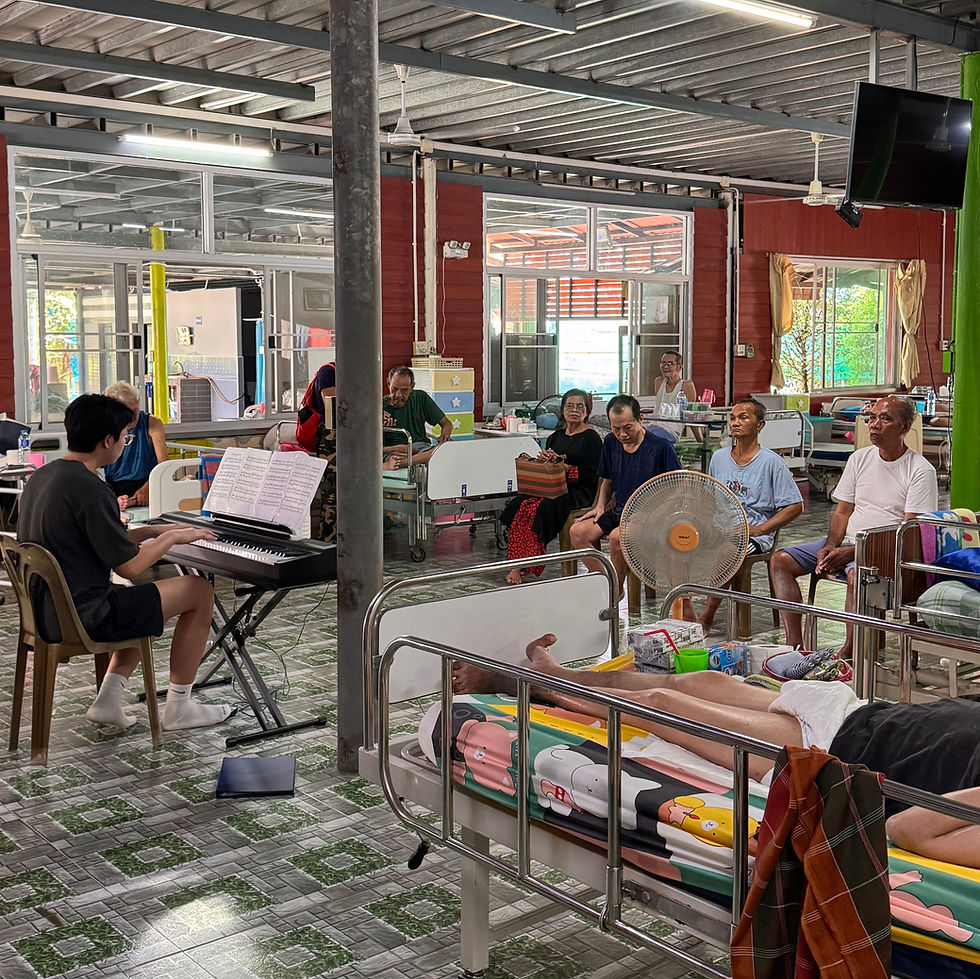
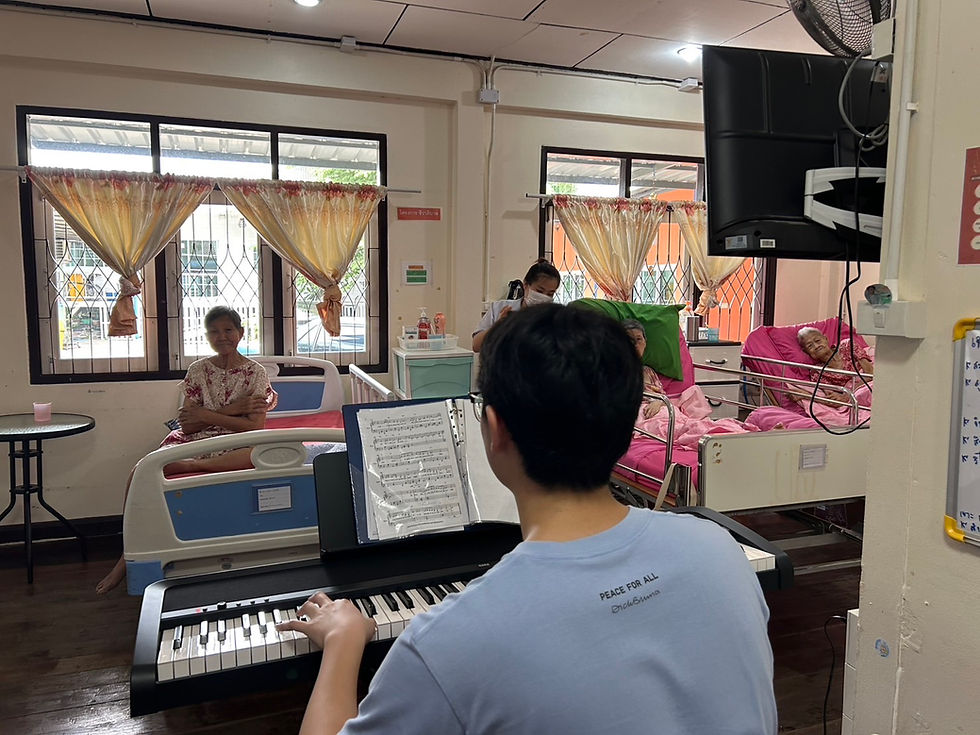
To reiterate what I stated in the previous post, music is more than just sound waves traveling through a medium. It's a language that doesn't need words to convey. And that is the beauty that lies within music. Hopefully, you've gained some valuable insights on how I maximized the number of songs I was able to play while on a time crunch.
Next in my series, I'll discuss how I was able to contact hospital personnel to play the piano and how you can too.
Stay tuned.
-Team

$50
Product Title
Product Details goes here with the simple product description and more information can be seen by clicking the see more button. Product Details goes here with the simple product description and more information can be seen by clicking the see more button

$50
Product Title
Product Details goes here with the simple product description and more information can be seen by clicking the see more button. Product Details goes here with the simple product description and more information can be seen by clicking the see more button.
$50
Product Title
Product Details goes here with the simple product description and more information can be seen by clicking the see more button. Product Details goes here with the simple product description and more information can be seen by clicking the see more button.

Comments